
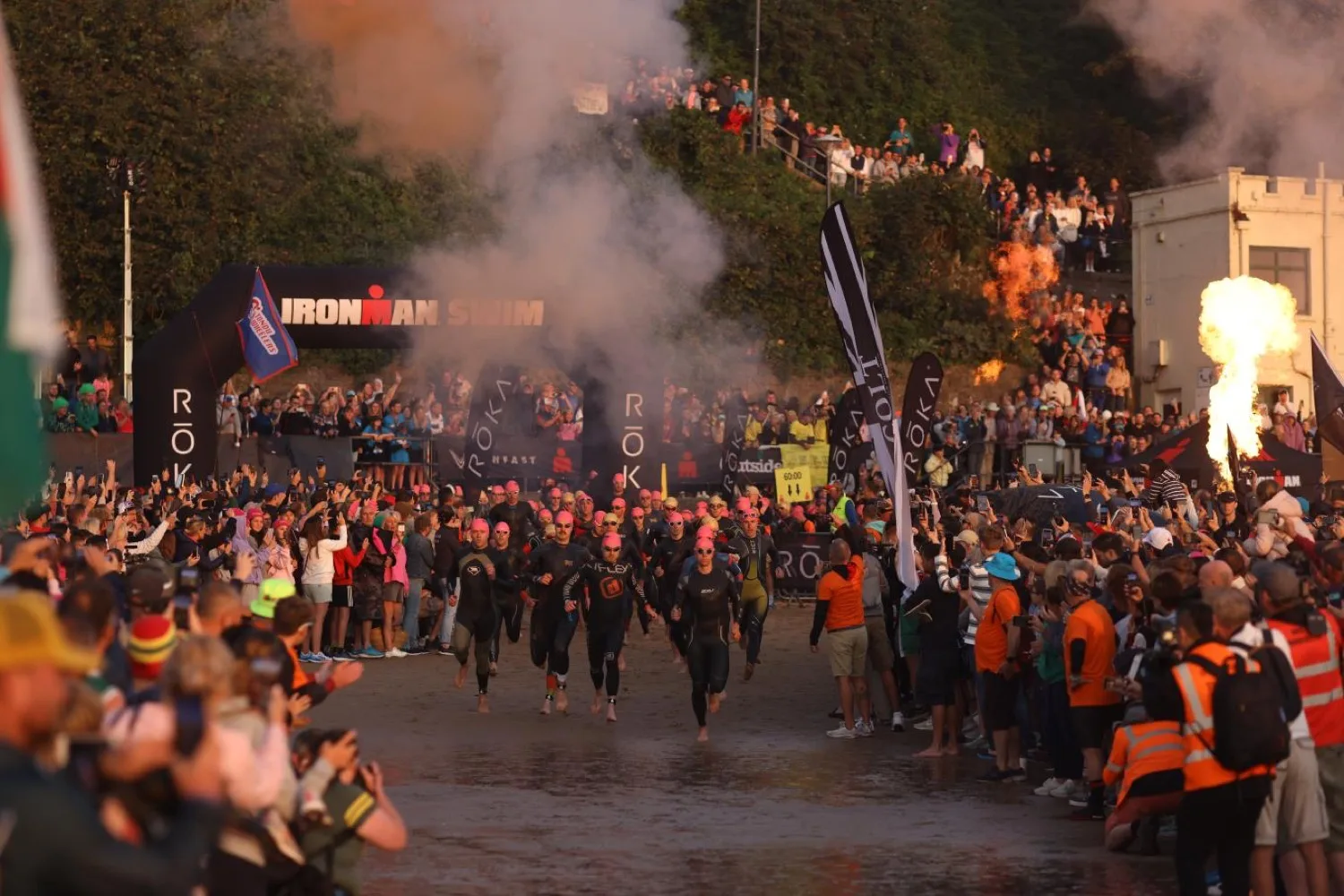
I spent the weekend of Ironman Wales 2026 down in Tenby, supporting some of my athletes who were racing. Ironman Wales is a Horsepower Coaching staple. I have coached three of the last five female age group champions here, and one overall winner, along with numerous athletes to personal bests and age group podiums. So I spend a lot of time in Tenby, and a lot of that time on the climbs watching the whole field roll past. You learn a great deal about who is going to have a good day, and who is about to have a very long afternoon.
If you are lining up in Tenby in 2027, this one is for you. I wanted to write down a few honest observations, the do's, the don'ts, and the things I watched cost people their race. None of this is complicated. Most of it is the stuff that gets drowned out by shiny kit and pro-tour marketing. Read it, sit with it, and give yourself the twelve months to get it right.
Observation One
Buy the bike and the gearing that suits YOU, not the pros
One of the biggest changes I have seen at Tenby over the last few years is the overwhelming adoption of World Tour aero tech. The long contested argument about whether Ironman Wales is a TT bike or a road bike course seems to be dead, with much of the age group field now riding cutting edge time trial bikes, disc wheels, wide aero helmets, the lot.
That same trend has flowed into gear choices, with riders opting for huge aero front chainrings. It looks incredible in transition, and it is great for drivetrain efficiency and a straight chainline on a flat 25 mile time trial. But on the undulating Tenby bike course, punctuated with steep ramps like Wisemans Bridge and the start of St Brides (Heartbreak Hill), that gearing forces you into a crushingly low cadence that leaves a dent in your legs. That dent is exactly what has you walking half of the marathon.
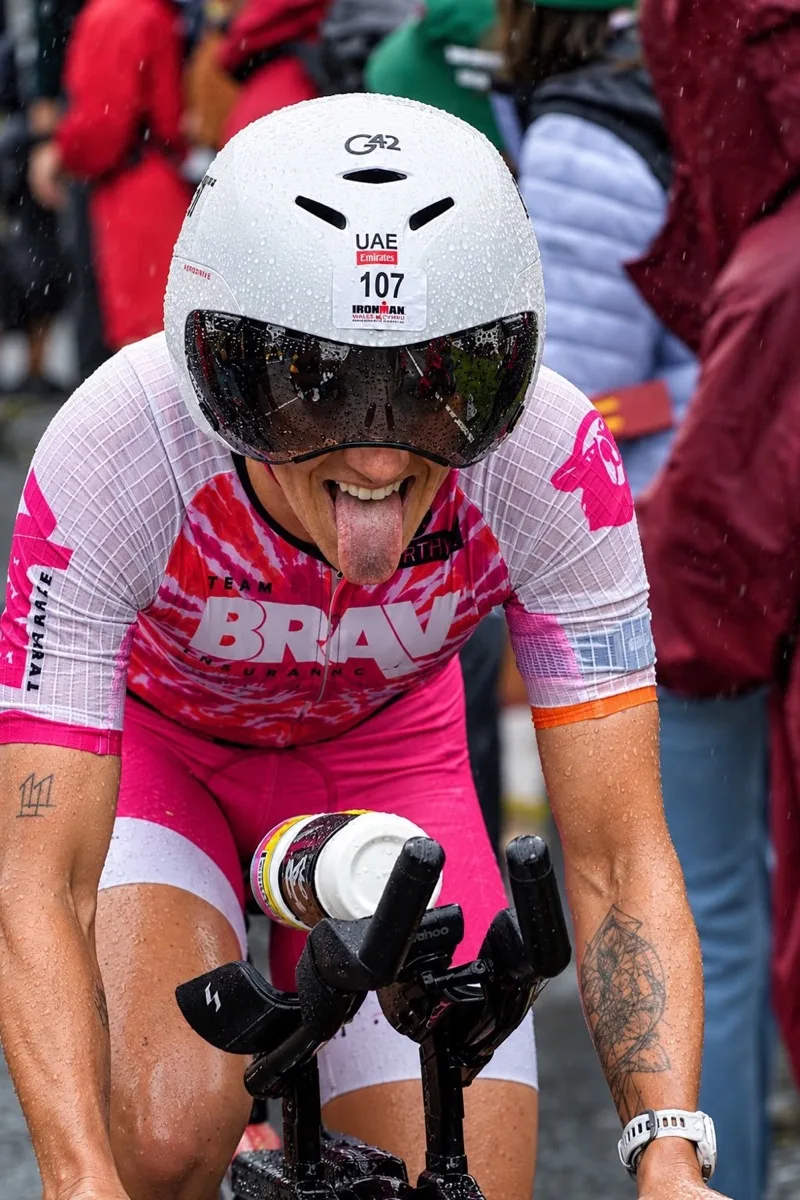
Madison S on the way to a new age group course record. The aero tech is real, but the result came from the training, gearing, pacing and fuelling underneath it.
I watched so many riders out of the saddle, grinding at 40 rpm on the way up Heartbreak Hill, with no easier gear to fall back on.
There needs to be more education about what an appropriate gear range is for a given rider, rather than what the fastest, most aero option is and what the pro is using. It is not an incredibly complex thing to work out, but it is specific to your weight, your power profile and the course you are racing. If you are not sure, speak to your coach. If they do not know, or cannot explain it, get a new coach.
Observation Two
Tenby rewards the patient, and punishes the ego
Following on from gearing comes your approach to the bike. Tenby rewards the athlete who is patient. It rewards those who can filter out the crowd noise, enjoy it, but still make good decisions based on their race plan.
A race plan you say? What is that?! Sounds like you need a new coach. I am talking about the plan your coach should have written for you, telling you about the wind and weather on the day, how to tackle the bike course, and what wattage, heart rate and cadence to ride. So that when you get to one of the most supported climbs on the entire course, you do not abandon your senses and put in a supra-FTP surge that floods your muscles with hydrogen ions and the negative byproducts of anaerobic energy production.
This is not just coaching folklore. When researchers had trained triathletes ride with a highly variable power distribution, throwing in big surges well above threshold, it went on to measurably impair their running performance compared to riding the same average power steadily (Etxebarria et al., 2013). On a course like Tenby, that is the marathon you are quietly spending.
The rule is simple. Stay seated. Use the gears to flatten the road. Ride a steady wattage up the climbs, at the top end of a set window you have proven you can hold in training.
Big attacks look cool. The crowd goes wild. You might even feel good while doing it. What you do not hear is the crowd murmuring, well, those in the crowd who know, "he won't be doing that on the second lap", or "good luck on the run course". Everything you do on that bike is purely in service of getting you to the run able to execute your best possible marathon. Nothing else matters.
Observation Three
Fuelling is a rehearsal, not a race day gamble
This is an interesting one. Early on in the Tenby marathon you see plenty of fast pros and quick age groupers doing it right, clearly well fuelled, controlled running, stoic expressions. Then after an hour or two you start to see the age groupers who may have overbiked, or under fuelled, come onto the run. The tell is usually the same: pale skin, sweating more than the intensity should warrant, slouched running form, and going backwards every time the road points up.
There is plenty of chat out there about World Tour cycling fuelling, and how insane a volume of carbs per hour pro riders and triathletes can now take on. The science does support high intakes, up to around 90 grams of carbohydrate an hour for long events, but the important word is individual: the right amount and type is specific to you, and it has to be practised (Jeukendrup, 2014). So do not read a headline and copy it. What anyone considering Tenby should do instead is spend a period of months working out what carb products, and what volume of them, actually work for you at a given race intensity.
The amount you need changes with the effort you are working at, but as a general rule you want to establish a really solid baseline of carb demand at fatmax level output, the intensity at which you burn the most fat (Achten et al., 2002). That is no accident. An Ironman is raced at a moderate, largely sub-threshold effort (Laursen et al., 2002), exactly the kind of steady aerobic intensity where fat is a major fuel and your carbohydrate can be spent carefully rather than blown early. Get that baseline dialled, and get your gut used to it, because the gut itself is trainable and adapts to carrying more fuel with less distress over time (Jeukendrup, 2017). The whole idea is that nothing on race day is a surprise.
Observation Four
Recovery is part of the race, and it is where most people get it wrong
This is the bit almost nobody talks about, and it is the part that quietly undoes people. After the race is the time you need to let your body bounce back from what you have just put it through. And this is not just a physical thing, it is a psychological one.
You have spent an entire year, sometimes longer, pushing your body through a series of progressive overload training blocks. You have said no to family and friends because you had training that had to take priority over life. You have pushed through when your body was aching, tired, or just plain did not want to get on the bike or get in the pool. You might be elated after racing, especially if you put together a good performance, or you might be sad or angry if it did not go to plan. You need to digest those feelings, reflect on what you did and why it happened. Speak to your coach and work through a proper structured debrief, so you actually understand why the race played out the way it did.
It is really important in this period, say the first three weeks, that you do not enter another race or make any big decisions. A wise man once told me never to make a decision in a high or a low emotional state, and that perfectly describes the weeks after a race.
Here is the part that catches people out. It is highly likely you will bounce back in the days after the race, almost as if the fatigue never hit you. The legs come good, the mind starts itching, and the little voice appears: was I too fit? Should I have gone harder? Can I start training again already? The answer is a big fat no.
Understand what has actually happened to your body. An Ironman, and a hilly one like Tenby in particular, leaves you in a genuinely beaten up state, even if you cannot always feel it. Straight after the finish your legs are measurably weaker, with reduced power, leg stiffness and force production, and that is before the deep fatigue has even set in (Mueller et al., 2015). The sheer duration of the effort, combined with the long downhill sections of the Tenby run that load your quads eccentrically, causes significant skeletal muscle damage. When researchers tracked triathletes after an Ironman, markers of muscle breakdown like creatine kinase were still raised five days later, and signs of muscle damage and systemic inflammation were still present nearly three weeks after the race (Neubauer, König and Wagner, 2008). Your muscle glycogen has been emptied and takes days of proper refuelling to restore, your stress hormones are elevated while your recovery hormones are suppressed, your immune system takes a temporary hit, which is part of why people so often seem to pick up a cold in the days after a big race, and even your heart shows the strain, with a temporary and usually reversible rise in the markers used to detect cardiac stress.
How you feel recovers long before your physiology does. Feeling fine is not the same as being repaired and adapted.
So ignore what the pros are doing, and ignore the random you follow on Instagram who is apparently back on the turbo two days later. You need to give your body the space to process that fatigue, so it can adapt and move you forward. Start again too soon and you will significantly extend your recovery, and blunt the very adaptation you spent all year earning.
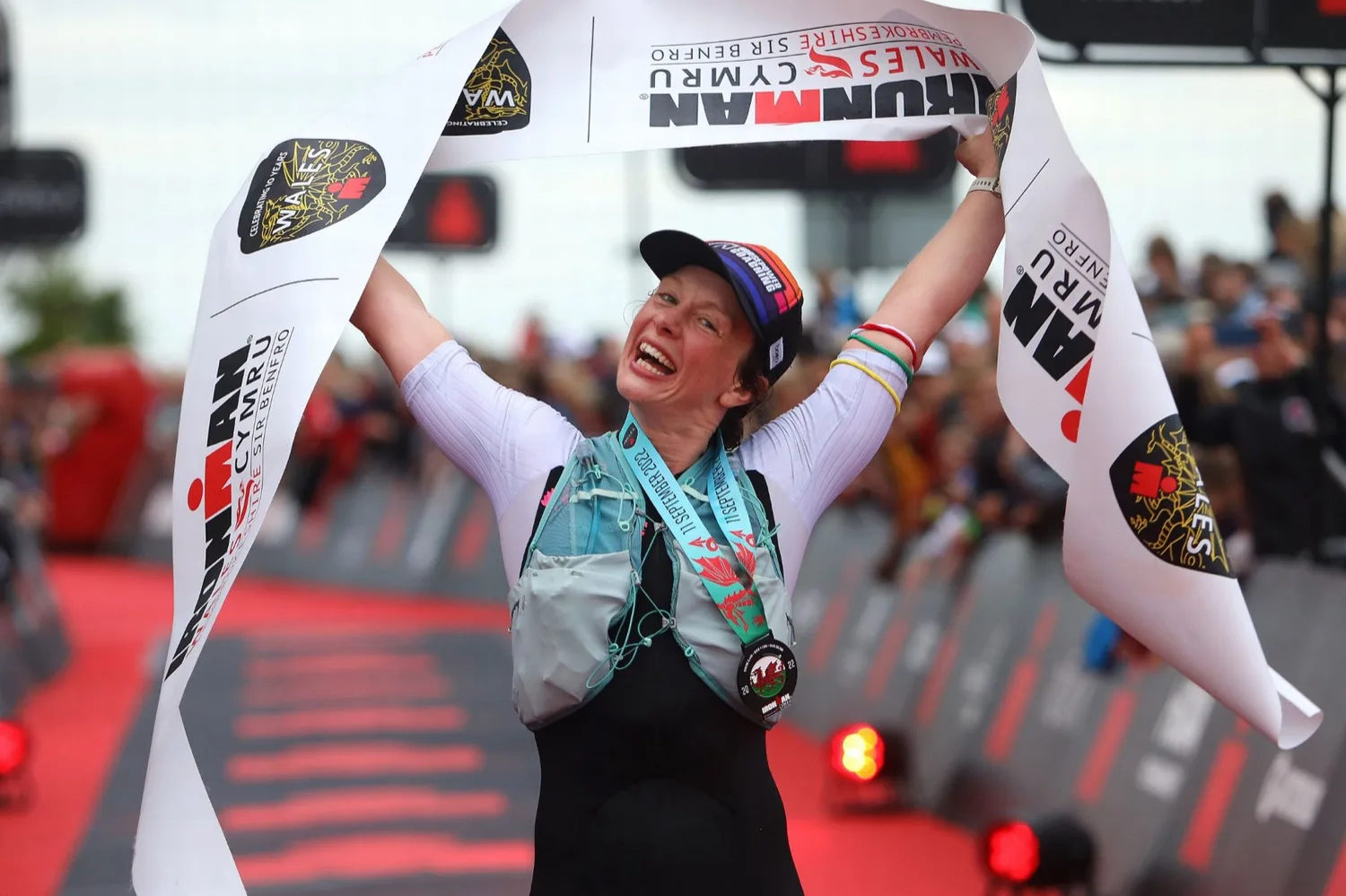
This is what the year is for. Get the recovery right and this feeling becomes a platform for the next one, not the end of it.
The short version
None of this is a secret, and none of it is glamorous. The athletes who have a good day in Tenby are almost never the ones with the shiniest kit in transition. They are the ones who chose gearing that suited them, rode to a real plan instead of the crowd, rehearsed their fuelling for months, and then recovered as seriously as they trained.
Insulate yourself against failure for 2027. Get the gear range right. Get a proper race plan. Rehearse the fuelling until it is boring. And respect the recovery. Do those four things and you give yourself the best possible chance of enjoying the hardest, most rewarding day on the Ironman calendar.
If any of that felt like it was aimed at you, and you want a coach who genuinely understands the difference between fast tech and the right tech, come and say hello over on Coached by Tom. Either way, look after yourselves, ride smart, and I will see you in Tenby.
References
Achten, J., Gleeson, M. and Jeukendrup, A.E. (2002) 'Determination of the exercise intensity that elicits maximal fat oxidation', Medicine and Science in Sports and Exercise, 34(1), pp. 92-97.
Etxebarria, N., Anson, J.M., Pyne, D.B. and Ferguson, R.A. (2013) 'Cycling attributes that enhance running performance after the cycle section in triathlon', International Journal of Sports Physiology and Performance, 8(5), pp. 502-509.
Jeukendrup, A.E. (2014) 'A step towards personalized sports nutrition: carbohydrate intake during exercise', Sports Medicine, 44(Suppl 1), pp. S25-S33.
Jeukendrup, A.E. (2017) 'Training the gut for athletes', Sports Medicine, 47(Suppl 1), pp. S101-S110.
Laursen, P.B., Rhodes, E.C., Langill, R.H., McKenzie, D.C. and Taunton, J.E. (2002) 'Relationship of exercise test variables to cycling performance in an Ironman triathlon', European Journal of Applied Physiology, 87(4-5), pp. 433-440.
Mueller, S.M., Knechtle, P., Knechtle, B. and Toigo, M. (2015) 'An Ironman triathlon reduces neuromuscular performance due to impaired force transmission and reduced leg stiffness', European Journal of Applied Physiology, 115(4), pp. 795-802.
Neubauer, O., König, D. and Wagner, K.-H. (2008) 'Recovery after an Ironman triathlon: sustained inflammatory responses and muscular stress', European Journal of Applied Physiology, 104(3), pp. 417-426.
Tom Cooling coaches endurance athletes at Horsepower Coaching. This piece is written from observations at Ironman Wales 2026 and is general guidance, not a substitute for individual coaching or medical advice.
Train with Horsepower
If that is how you like your coaching, straight and built for your race, take a look at the training plans or see how coaching works.