
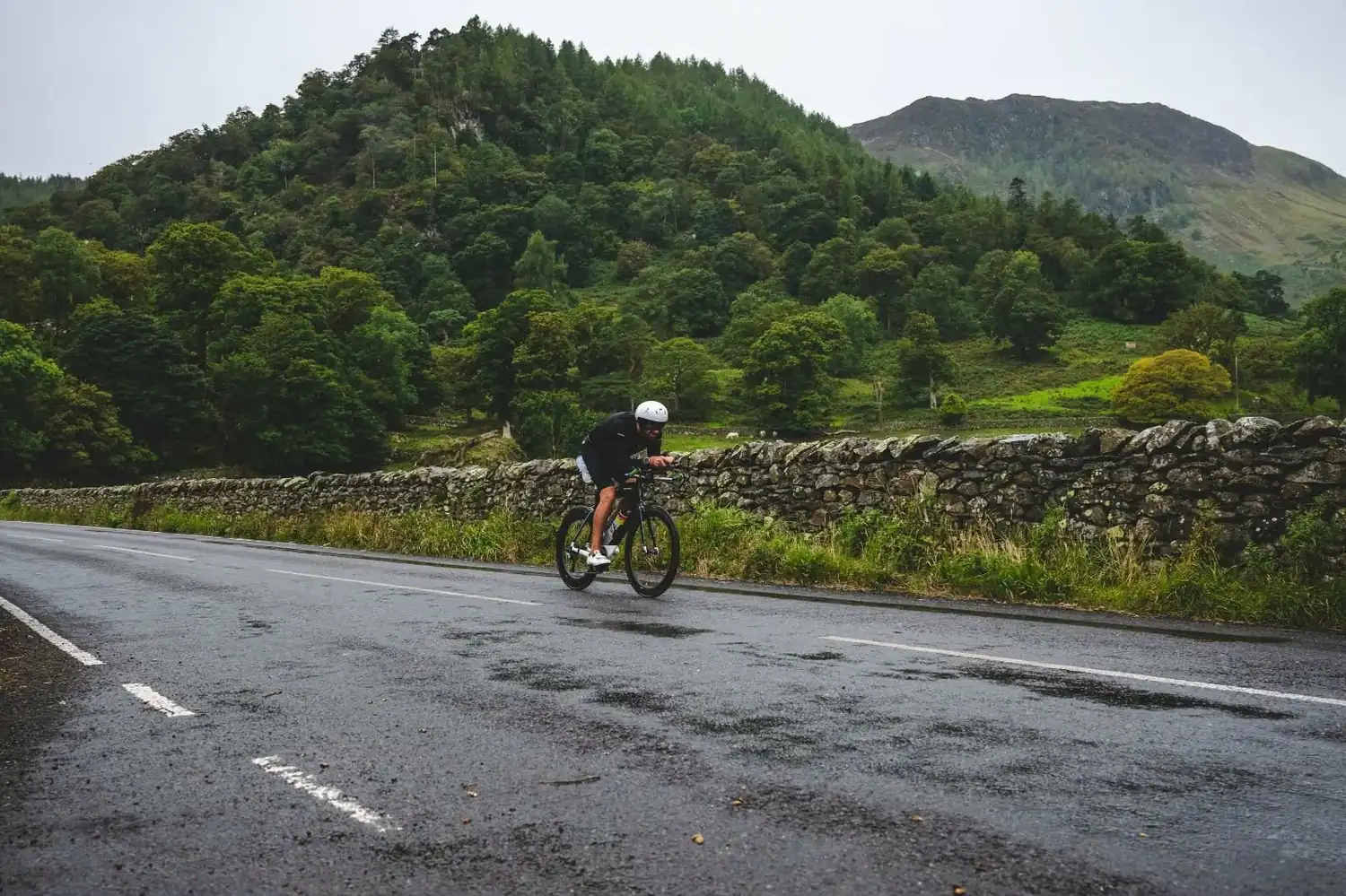
The race is usually lost in the first hour, and it's lost by feeling good. You're fresh, the legs are singing, everyone around you is going hard, and the plan that told you to hold back suddenly feels far too cautious. So you spend a little extra, and a little more, and by the back half you're paying it all back with interest. A race plan is only worth anything if you've got the discipline to hold it when it feels wrong to.
Why do people blow up when they had a plan?
Because a plan is a promise you make to yourself when you're calm, and you break it when you're excited. The physiology isn't complicated. Go above your sustainable intensity early and you tip into burning through glycogen and piling up fatigue faster than you can clear it. It feels free at the time because you're fresh. It is not free. It's a loan, and the interest rate is brutal in the last third.
The riders who execute aren't tougher or fitter than the ones who fold. They're just more disciplined in the opening hour, when discipline is hardest and matters most.
Should you hold constant power the whole way?
No, and this is where a lot of simple advice goes wrong. Holding one flat number isn't how I pace a real course, because a real course isn't flat. The right pacing is variable power, spent where it buys you the most time, and constrained so the whole effort still adds up to the same total.
The way I set it up:
- On sustained climbs, spend a little more. On a climb steeper than about three per cent, you can lift the power to around eight per cent over target. You're moving slowly here, so the extra watts buy a lot of time.
- On descents, back right off. On anything steeper than about minus three per cent, drop to around eighty-eight per cent of target or just spin. You're already fast; extra watts here buy you almost nothing, so bank the energy.
- Into a headwind, a small lift. Headwind sections take a touch more, in the region of three to four per cent, because that's where you're slowest for the effort.
- It all has to renormalise. This is the non-negotiable bit. The whole plan is normalised back to your target intensity, so the redistribution makes you faster on the same energy. It's never a licence to spend extra energy dressed up as clever pacing. Same budget, spent smarter.
The caps get smaller the longer the race. A short time trial has headroom to play with; an Ironman bike leg does not, so the swings shrink accordingly.
Why does spending on the climbs and saving on the descents make you faster?
It comes down to where your watts turn into time. On a climb you're moving slowly, so most of your effort is going into hauling you up the hill against gravity, and gravity doesn't care how aerodynamic you are. A few extra watts there translate into a meaningful chunk of time saved, because you're spending a long time on that stretch. On a fast descent the opposite is true. You're already moving quickly, air resistance is enormous and rising with the cube of your speed, so pouring watts in buys you almost nothing; you'd burn a lot of energy to gain a couple of seconds. The intelligent move is to take that same energy and spend it where it's cheap to buy time, which is the climbs, and coast where time is expensive to buy, which is the descents.
That's the whole logic of variable pacing. It's not about working harder overall, it's about moving the same total effort to the parts of the course where it pays. Constant power feels disciplined but it's actually leaving time on the road, because it spends the same on a descent, where watts are wasted, as on a climb, where they're gold.
What about wind, heat and fuelling?
These aren't footnotes. They change the actual numbers on the day.
- Wind changes what a given speed costs. A plan built for still air is wrong the moment the forecast turns, so the pacing has to account for the wind you'll actually meet, section by section.
- Heat raises your heart rate for the same power, pushes your fluid and electrolyte losses up, and quietly lowers the intensity you can hold. Pretending it doesn't is how people cook themselves by halfway.
- Fuelling is the one that ends more races than fitness does. You can't pace a plan you haven't fuelled. If the carbohydrate isn't going in from early, the back half of the plan is fiction, because the engine has nothing left to spend.
When I write a race plan for one of my athletes, I build these in, so the plan is for the day you're actually racing, not an idealised one. But the plan only sets the targets. You still have to execute them.
How do you actually hold back early?
You decide, before the start, that the first hour is going to feel too easy, and you treat that feeling as confirmation you're doing it right, not a sign to push. You watch your own numbers, not the people around you, because you don't know their plan or their fitness and half of them are making the exact mistake you're trying to avoid. And you trust that the discipline you show in the first hour is precisely what buys you the freedom to race hard in the last one.
Make the plan honestly. Fuel it. Hold it when it feels wrong. That's the whole game, and the hardest part of it happens when you still feel great.
Train with Horsepower
If that is how you like your coaching, straight and built for your race, take a look at the training plans or see how coaching works.