
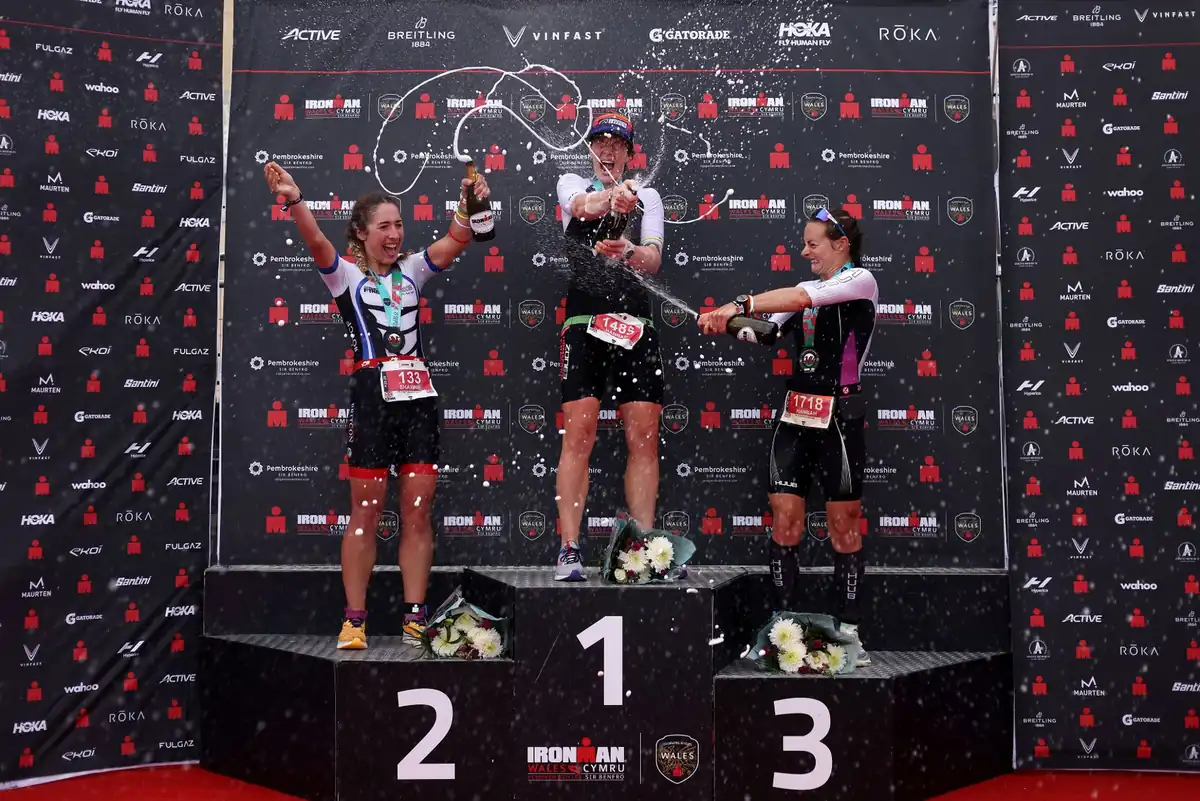
I have been coming back to Tenby for years, first as an athlete and then as a coach, and I still think Ironman Wales is the best race on the circuit. It is also the one that punishes a bad plan more thoroughly than any other. This is not a course you can bluff. It will find whatever you have not prepared and it will bring it out of you somewhere around mile 66 of the bike, in front of several thousand people who are screaming at you to go faster.
I have had the honour of supporting two remarkable women here, to age category wins, overall age category titles and overall wins. Hannah S won Ironman Wales in 2022. Madison S won it in 2025, and stood on the podium in second in 2023. Same approach, same course, three years apart.
So when I tell you what matters at this race, it is not theory. It is what has actually worked, repeatedly, on this exact piece of Pembrokeshire coastline.
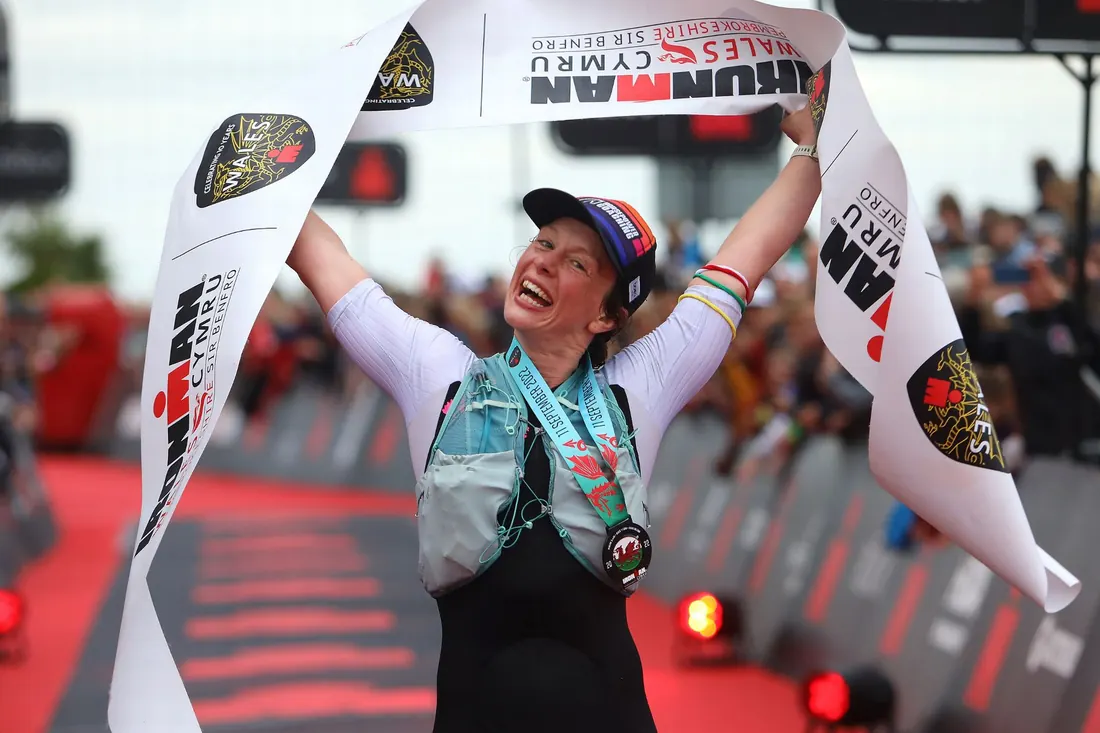
Here is the day, discipline by discipline.
What is Ironman Wales, and where did it come from?
The race launched in 2011, and it took Tenby about ten minutes to adopt it completely.
A lot of Ironman venues are essentially a car park, a lake and a ring road. Tenby is a walled medieval town on the Pembrokeshire coast, with a harbour, a castle beach and pastel houses stacked above the sand, and the course runs straight through the middle of it. The town does not tolerate the race, it owns it.
That matters more than it sounds. Because the course goes through town twice on the bike and four times on the run, the crowd is not something you pass once. It is a constant, and it shapes how the race gets ridden and run.
What the event built almost immediately was a reputation. Within a few years Ironman Wales was regularly being called the hardest race on the official Ironman circuit, and it has held that reputation for fifteen years. That reputation is not marketing. It shows up in the results.
Why is Ironman Wales an hour slower than a normal Ironman?
Because it is. Wales carries the slowest average finishing times of any race on the circuit, comfortably north of thirteen hours for age-group athletes, where a typical Ironman sits nearer twelve.
An hour. That is the number I want you to sit with, because almost every mistake I see at this race comes from an athlete who has not internalised it.
They arrive with a time goal built on their last Ironman, or on a flat course they did two years ago, or on what their training partner did at Hamburg. Then they spend the first half of the day defending that number, burn energy they do not have, and come apart somewhere on the second loop of the bike or the second lap of the run. The course did not beat them. Their expectations did.
Where the hour actually goes
It is not one big thing. It is everything, stacked:
- A sea swim with an Australian exit and awkward sighting.
- A long run up off the beach and through town before you even reach your bike.
- A bike course with no mountain on it and no rhythm either. Look at the profile and it is like looking into the mouth of a crocodile: none of the individual teeth is that big, but there are a great many of them, and they arrive with no warning, so you never settle into a constant effort.
- A marathon that climbs out of town and back down again four separate times.
Set your expectations against Wales, not against your PB. An athlete who accepts the hour races the course in front of them. An athlete who does not spends all day fighting a number that was never available.
The swim: how do you sight it now the direction has reversed?
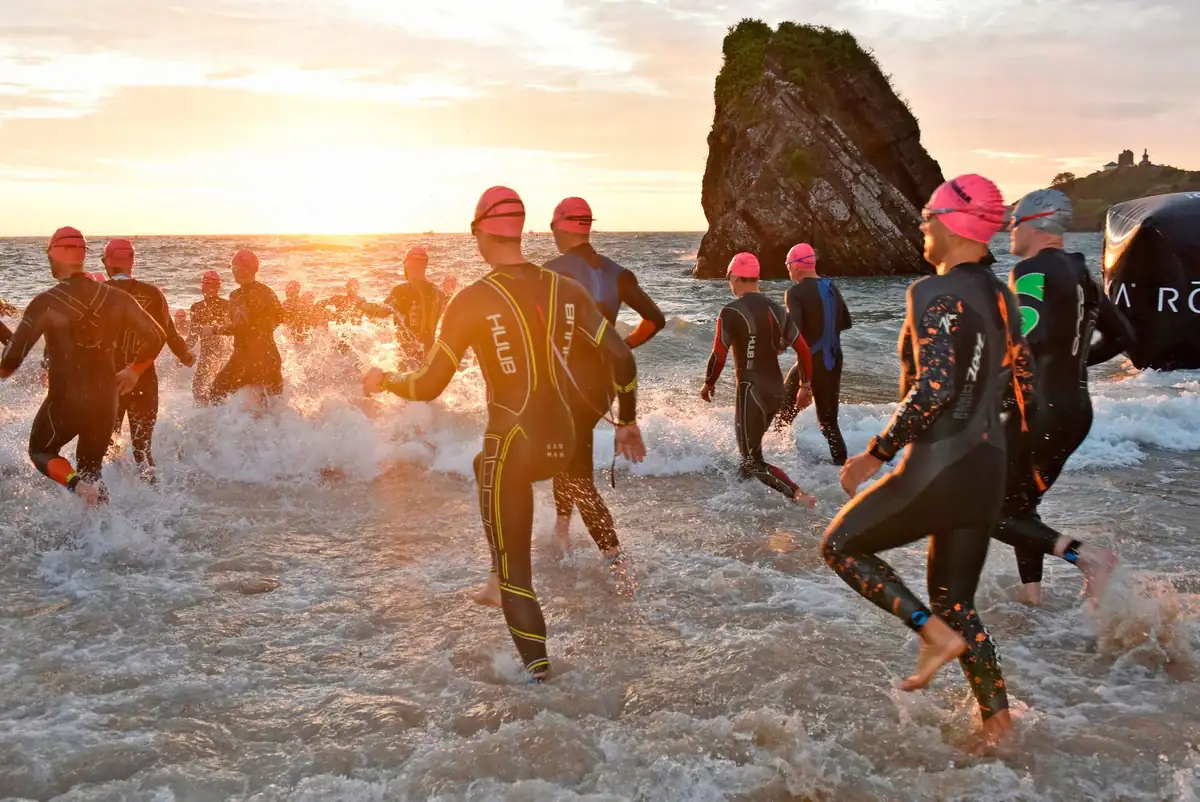
The swim is two laps in the bay with an Australian exit between them, and the honest answer on sighting is that it has got harder.
The lifeboat station has gone
It used to be straightforward. You had the lifeboat station sitting there as an obvious aim point, and you could pick it up from a long way out and just swim at it. With the lap direction reversed, that has gone. Swimming parallel to the beach there is no single clean landmark to lock onto, so you are sighting off the cliffs along the coast, and cliffs are a much vaguer target than a building.
What that means in practice is that you have to sight more often than you would like, and you have to accept that. Athletes lose more time in Tenby by drifting than by swimming slowly. Put your head up every six to eight strokes and you will swim a shorter line than the person who sights every twenty and spends the leg correcting a slow curve out to sea.
Practise the Australian exit, and find feet
Standing up in surf with your heart rate near the top of the range, running across sand and then diving back in for a second lap is a genuinely different skill from swimming a straight 3.8 kilometres in a lake. Rehearse it.
And find feet. In a bay swim with weak sighting references, sitting on a decent pair of feet is worth more than it is anywhere else, because you are borrowing their navigation as well as their draft.
The zig zags: what happens between the water and the bike?
This is the part of Ironman Wales that nobody rehearses and everybody remembers.
You come out of the water onto North Beach and the zig zags are in front of you: the long ramp up off the sand and into town, then around a kilometre of running through Tenby to transition, most of it lined with people. It is one of the great sights in the sport. It is also a brilliant opportunity to wreck your race in the first fifteen minutes.
The wetsuit
Get it off in a controlled way. Not fast, controlled. Peel it to the waist while you are still moving, do not fight it standing still on the sand, and do not let the crowd noise turn a simple job into a wrestling match. I have watched very good athletes lose two minutes and a lot of composure to a wetsuit and a cold pair of hands.
The ramp
Walk or jog the zig zags at an effort you would describe as easy. Not race effort. The crowd is loud, the ramp is steep, and every instinct will tell you to attack it. Do not. Your heart rate is already high from the swim, you have 137 miles left, and there is no version of this race that is won on the zig zags.
That is the theme of the whole day, and it starts right here: controlled, controlled, controlled.
The bike: what gearing do you actually need?
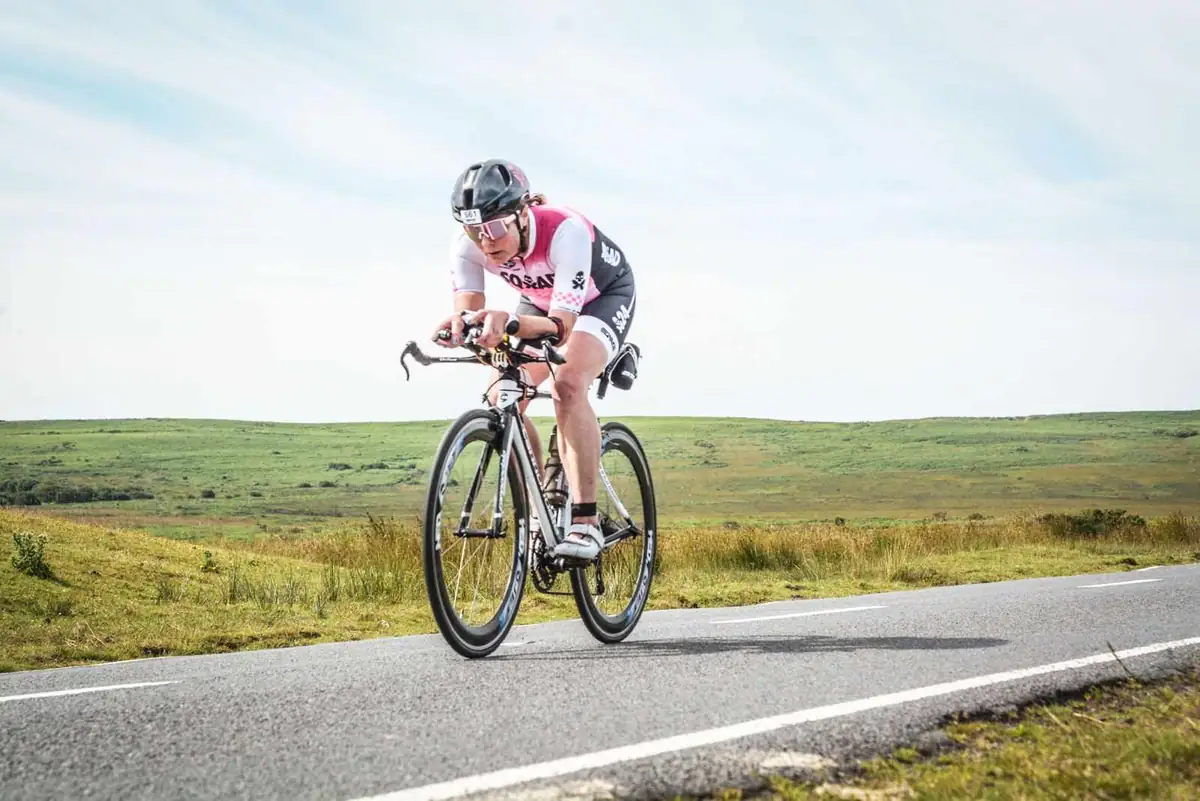
You need enough gearing to stay seated and spin the climbs, rather than having to stand up and power over them.
That is the whole principle, and it matters more here than at almost any other Ironman. The climbs at Wales come at you constantly. If your gearing forces you out of the saddle each time, you are making dozens of small anaerobic efforts across 111 miles, and every one of them is a withdrawal from an account you need for the marathon. Sit down and spin, and you protect your legs while keeping the effort aerobic.
So put a big enough cassette on. Whatever it takes on your setup to keep turning the pedals seated on the steepest ramps, fit it, and do not let pride pick your gear ratios.
Aero still wins, but only if you have earned the position
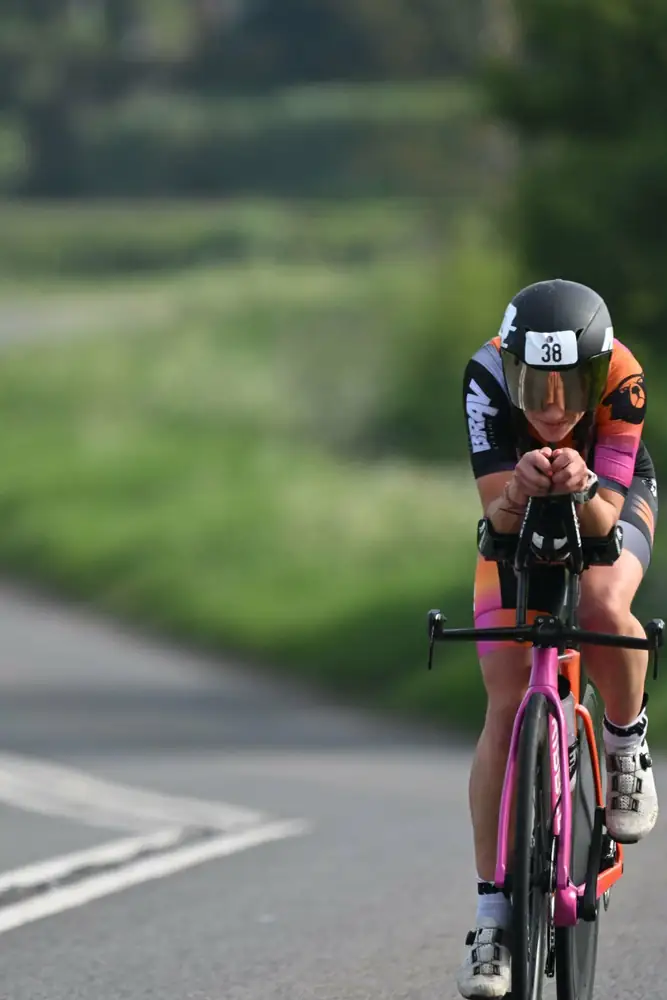
This is a long day, and the flat and rolling sections between the climbs are where the time actually goes. But here is the part people get wrong: you have to be adapted to the position you are riding.
There is no point rolling out a new TT bike on race day and expecting it to work. The position needs to be one you have trained in, fuelled in and climbed in, for months. An aggressive position you cannot hold past mile 60 is slower than a sensible one you can hold all day, and it will hand you a marathon on a broken back.
Get the bike sorted early in the season, ride it, then race it. Do not introduce it in September.
The bike: should you take a gillet?
Yes, plan for it, because it can be genuinely cold coming out of the water at this time of year.
Put optional arm warmers and an aero gillet in your T1 bag. Optional is the key word. You are not committing to wearing them, you are giving yourself the choice on the morning, when you actually know what the weather is doing and how cold the water was.
The reason this matters is not comfort. A cold athlete produces less power, makes worse decisions and fuels badly, and you have a long exposed day ahead on the Pembrokeshire coast. Thirty seconds spent pulling a gillet on in transition can buy you back a great deal over six hours, and an aero gillet in particular costs you almost nothing in drag.
The bike: how should you pace 111 miles of this?
Composure and control pay dividends here, more than raw watts do.
The shape of the day is one big loop of roughly 69 miles, out through Lamphey, Pembroke, Angle, Carew and Templeton, then one smaller loop of about 41 miles that repeats the back half.
Ride your own race
The single most common mistake I see is athletes riding that first loop on other people's terms. Somebody comes past on a climb and, instead of holding the number their own plan says, they go with them. Then somebody else comes past. By Saundersfoot they have made forty separate small decisions to ride harder than planned, and they have no idea they have done it, because each one felt trivial.
Ignore everyone else. Genuinely. The person going past you at mile 30 is not racing you, and there is a decent chance they will be walking on the run.
Fuel on a schedule, not on feel
The water is cold, your stomach is not in a hurry to cooperate, and the first hour on the bike sets up the entire back half of your day. Take on what your plan says even when you do not fancy it, because the climbs mean your effort is constantly spiking and you are burning through carbohydrate faster than a steady course would have you believe.
The payoff on the small loop
When you get onto that second, smaller loop having ridden the first one properly, you will start coming past people who are coming to pieces. That is the moment.
Every disciplined decision you made in the first 69 miles gets paid back in a single hour on the small loop, and there is nothing in the sport that feels better than riding past somebody who dropped you at mile 30. Bask in it. You earned it.
The bike: how do you handle Heartbreak Hill?
Embrace it, but do not let it ruin your race.
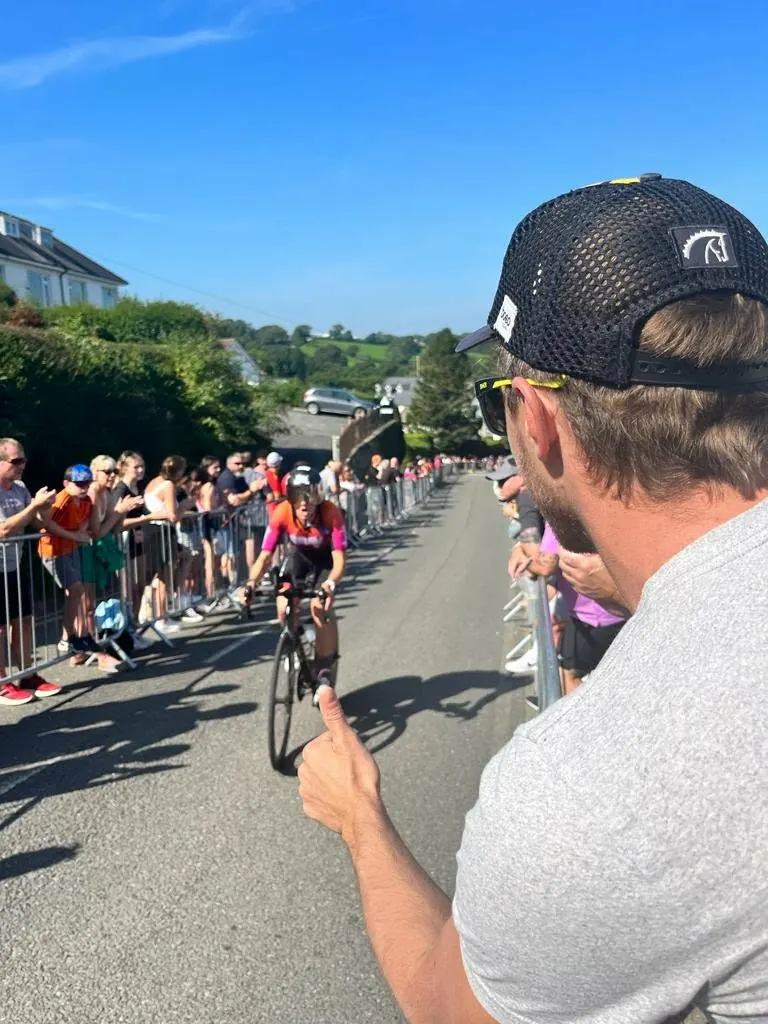
Heartbreak Hill is the drag up out of Saundersfoot: about 1.2 miles at a little over four per cent, with a shorter, sharper kick of around seven per cent up from Wisemans Bridge just before it. It comes at the end of the big loop at around mile 66, and then again on the small loop at around mile 107.
On paper it is not a monster. In reality it is lined with people, several deep, banging the barriers and roaring, and it is one of the great atmospheres in triathlon.
That atmosphere is precisely the danger. The crowd is effectively inviting you into the red, and it feels rude to decline. Years ago I rode up there myself on the wrong side of my heart rate limit for exactly that reason.
So enjoy it, absolutely. Take the noise in, because it is one of the reasons you came. But hold your number. Sit down, spin, and let the crowd carry you rather than push you. The second time you meet it you will be 107 miles in and most people around you will be in trouble. The version of you who stayed disciplined the first time is the version who gets to enjoy it the second time.
The run: how do you hold four laps together?
The Ironman Wales marathon is four laps of a course with two completely different personalities, and you have to manage both.
The climb to New Hedges
Each lap is 6.5 miles. Out of town it climbs for 2.4 miles up to New Hedges, nearly 300 feet above the sea, and that section is isolating and quiet and it can be genuinely heartbreaking, particularly on laps three and four when the light is going. There is very little to distract you from how you feel.
Then you turn and descend for 3.2 miles back towards the seafront, and you collect your band part way down that descent. Four bands, four small markers that the thing is actually progressing.
The town
Then you hit town, and it is the complete opposite. Noise, crowds, colour, pubs, people shouting your name, an enormous amount of stimulus after twenty minutes of near silence. Lots of turns, lots of people to overtake, and the temptation is to lift the pace because it feels good and everyone is watching.
One rhythm, both halves
The job on both personalities is the same: maintain rhythm. Do not let the climb drag your cadence down into a shuffle, and do not let the town lift you into a pace you cannot hold. The athlete who runs an even effort across all four laps will beat the athlete who runs the town sections hard and the climbs badly, every time.
And keep fuelling. It is the first thing to fall apart when you are hurting, and it is the thing that will end your race if you let it slide. Have a plan for every aid station and stick to it even when your stomach is complaining, because the alternative is walking down from New Hedges with nothing left to give.
Control, again. It is always control.
What does the support actually do for you?
I want to give this its own section, because at Wales the crowd is not decoration. It is a component of the race.
The whole town turns out, all day, in whatever the weather is doing. They line the zig zags at breakfast time. They stand on Heartbreak Hill for hours. They are still out on the run course in the dark, cheering for people they have never met, twelve hours after the professionals have finished. Local families put chairs out. Pubs empty onto the pavement. People read your name off your race number and use it.
Handled well, that is worth a great deal, and it is one of the reasons an ordinary athlete can produce something at Wales they cannot produce anywhere else. Handled badly, it is exactly what drags you into the red on the zig zags and on Heartbreak Hill.
So here is the rule: take the support late, and stay deaf to it early. Use it on laps three and four of the run when you genuinely need lifting. Ignore it in the first two hours, when it is trying to make you a hero far too soon.
The finish: the red carpet
There is no sensible way to be objective about this bit.
On that last push to the line, when you finally get to turn off the lap course and take the finish chute instead of heading back out for another climb to New Hedges, the noise is extraordinary.
Then the red carpet. And that is the moment every one of those disciplined decisions was for.
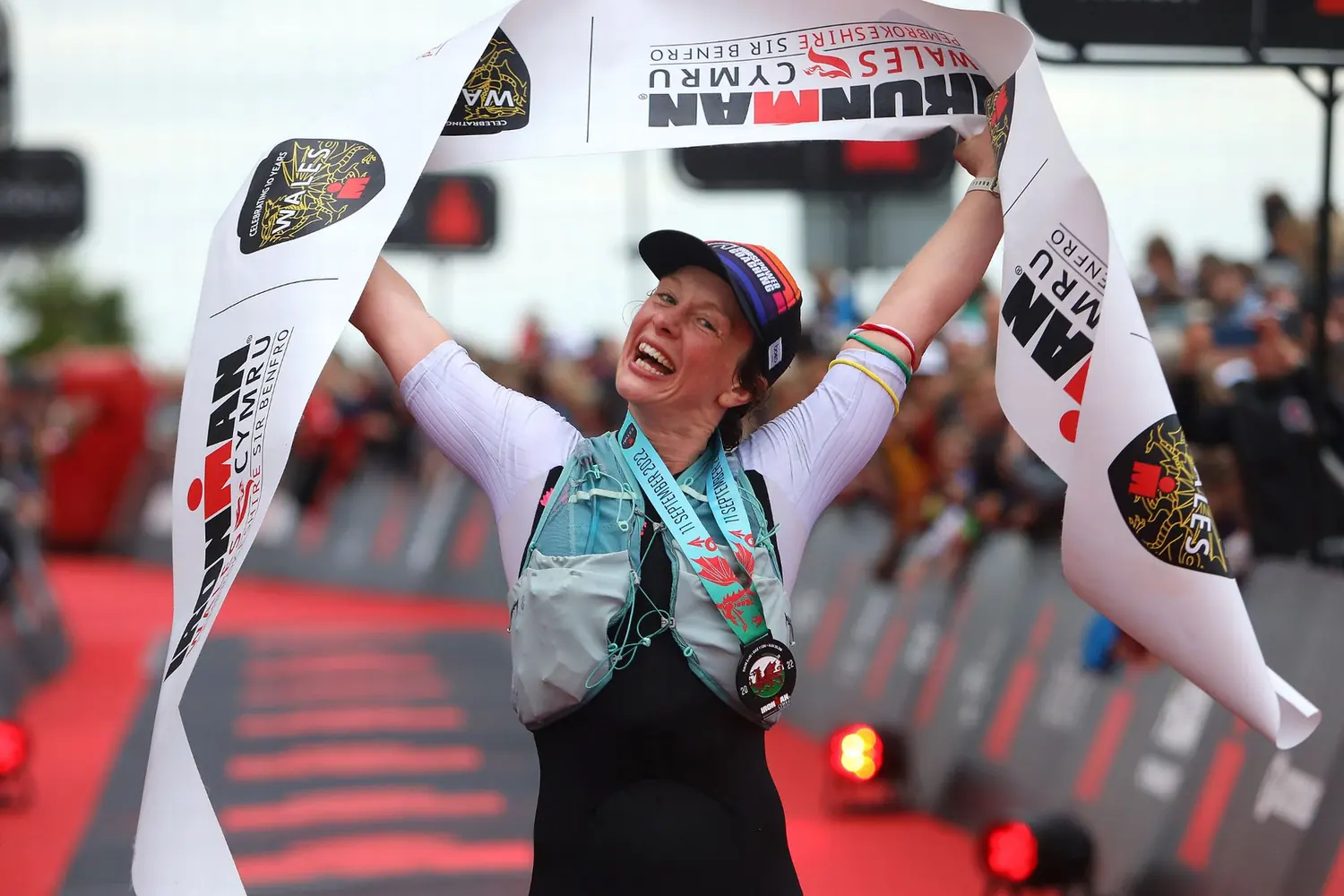
I have stood at that line and watched my athletes win this race, and it does not get old. Tenby has something other Ironman venues simply do not, and everyone who races here knows it.
The question the town asks you at the end of the day is a simple one.
Did you beat the dragon?

The short version
Ironman Wales is not won by the strongest athlete. It is won by the most composed one.
- Accept the hour. This course is slower than a normal Ironman, so race the course, not your PB.
- Sight more often than feels necessary. The cliffs are a vague target since the direction reversed.
- Get the wetsuit off calmly and take the zig zags easy. Nothing is won there.
- Fit gearing that lets you stay seated and spin. Be aero, but only in a position you have genuinely adapted to.
- Put optional arm warmers and an aero gillet in your T1 bag.
- Fuel on a schedule from the first mile of the bike, and ignore everybody else's race.
- Enjoy Heartbreak Hill without letting it take your race. You meet it twice.
- Hold one rhythm across four laps. Do not die on the climb, do not get carried away in town.
- Let the crowd lift you late, not early.
- Then take the red carpet, having done it properly.
If you want this race planned around you, your fitness and your season rather than a generic template, that is exactly what I do. Have a look at Coached by Tom, or read Enter The Dragon for what this course looked like from the inside when I was the one racing it.
Train with Horsepower
If that is how you like your coaching, straight and built for your race, take a look at the training plans or see how coaching works.