

The Black Magic of Swimming
I think its fair to say, unless you swam competitively as a child, really getting to grips with swimming quickly can feel like black magic.
How many of you reading have felt that sinking feeling of your feet being tickled half way down a 25m length as the swimmer behind threatens to overtake? You respond by trying to swim harder and harder to get away only to surface at the end of a swimming pool lane flustered, breathless and feeling like the water temperature has increased to that of a hot bath.
The questions that follow usually go along the lines of: "I'm fit so why can't I swim faster", "I'm sure my catch was right???", "was I kicking enough?", "how are they so fast and not beetroot red???"
Its a complete drag hey? Well this this blog is an insight into my slightly different approach to swim training for triathletes. Something that if you can get your head around, it will change the way you see the water and hopefully set you on a course to faster more efficient swimming.
Water
Ok so its easy to feel like water is triathlete enemy number one. Well to quote Sun Tzu "if you know the enemy and know yourself, you need not fear the results of a hundred battles". The reason I'm quoting The Art of War is knowing your enemy, water in this case is the key to overcoming it. There is a bit about knowing yourself (i.e. what you're doing in the water) but we will come onto that later.
So, water is everywhere, we're made of it, we need it to survive... we need to swim through it to get through a triathlon etc etc etc. The main thing you need to remember that unlike riding your bike through air that breaks relatively easily, water is circa 800 times more dense than air (depending if we're talking salt water or fresh). Everyone is constantly bombarded with aero this and aero that when it comes to reducing drag to cycle faster... but the principle is SO much more important when it comes to your swim.
Drag
There are several forces at work as you try to swim, some you are in control of and others not. For the purposes of this we're going to work on the assumption that you're floating (yes your legs might sink - covered later) but you're at the top of the water column and not stuck on the bottom of the pool.
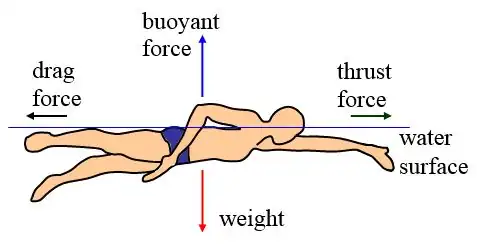
So the two we're interested in are thrust force (your kick and pull) and the drag force (how hydrodynamic (read: slippery) you are).
This is the key...different things moving through the water experience different drag coefficients: a rough brick would experience more drag than a smooth sphere for example or a human wearing baggy shorts would experience more drag than one wearing swim trunks. Even if you don the most slippery swimsuit on the market, you're still going to need to use 80% of your energy just to get through the wet stuff. Ever walked across the shallow end of a pool? How hard does that feel?
The amount of drag you experience, in a similar way to cycling aerodynamics is down to frontal area - viewed head on, the amount of you trying to break a path through the water. Minimising this frontal area is fundamental to improving your swim efficiency.
The way I explain this to my coached athletes is to imagine they are a bullet punching through a piece of paper (the paper being the water). The size of the bullet hole created in the paper is usually dictated by the size of their hips and shoulders because you cant make them smaller. The idea is to make everything else (arms, legs and head) fit through that hole.

Now if you imagine every time you're moving through the water you need to fit everything through that hole to maintain your minimum frontal area, when your legs and hips sink a bit you need to break a bit more paper and create a bigger hole, that's more drag... maybe as much as 20-40% more drag.
Relating this back to Newton's 3rd Law (for every action, there is an equal and opposite reaction), your legs dropping increases your frontal area which means unless you apply more forward force on the water to maintain the same speed, you will slow down.
This slowing down is significant. Some drag hydrodynamic drag coefficient equations suggest that at a steady state swim speed, every 1% of increased drag results in a 0.34% decrease in speed. So those legs dropping a bit and increasing your bullet hole by 20% just slowed you down by 6.8%.
In a real world example, say you swim the Ironman swim leg in 1 hour 5 minutes on your best day, that increased drag would add 4 minutes to your swim split. That is unless you start working harder and burn some matches early on - not the ideal start to a long day out. It doesn't sound much but age groups and podiums are won and lost by smaller margins.
What Can You Do?
So now you know a bit more about your enemy and forces that are out of your control. Lets move on to things that are within your control.
This may sound simple but this 5 point list I think is the starter pack for efficient swimming.
1 - Tension Tension Tension
This is a bit of a simple one you can do at home.... Stand on your tip toes with your arms above your head. Try and be as tall as you can and reach the the ceiling. Remember what that body tension feels like, your pointed feet, tight and controlled core, long and thin shoulders, pointed fingers... That's what you need to carry into the pool to keep your body long and thin and make sure you're fitting through that hole neatly.
2 - Exhale
Yes I know you haven't taken a stroke yet, but you need to learn this before you start because it is one of the biggest barriers to people being able to enjoy and relax into their swimming.
As a rule, if you try and exhale and inhale when you turn your head to breathe you will quickly develop an oxygen debt because unless your head is on the side for an age, there isn't enough time to swim properly and do both the exhale and inhale in the same rotation.
If your face is in the water, you're gently exhaling the entire time! Not only does this mean when you rotate to breathe, you only need to breathe in so you can relax about it because you have enough time... but it also means that you don't have a chest cavity jam packed full of air... air that floats and causes your legs to sink.
3 - Streamlined & Know It
That sounds obvious but its the first step in the process. What we're looking for is for you to develop an appreciation of what streamlined feels like so you can identify when you're doing it wrong.
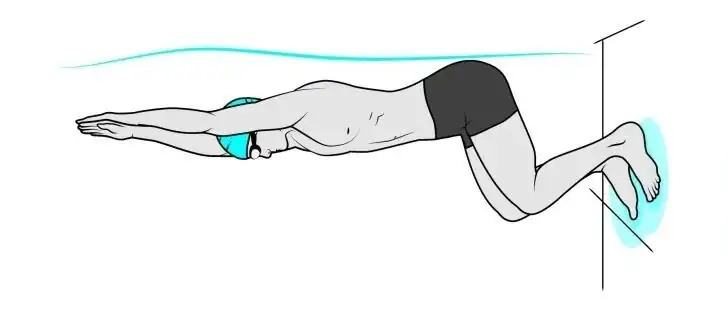
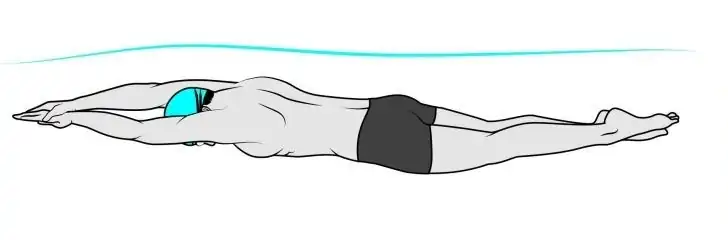
The key for this is channelling that tip toe body tension you practiced in point one into the pool. You want to be pushing off the wall and gliding as far as you can without kicking or moving into a full stroke. Feel the water moving across your back and shoulders, focus on how that changes when you're gliding through it quickly and when you eventually slow down. Keep practicing that trying to glide further and further and further. The key isn't pushing of the wall harder, its about making your body as slippery and as long as possible.
4 - Hips Don't Lie
Ever felt like your hands and feet aren't connected when you're swimming? The key is your hips. So you have body tension and a good streamlined position that cuts through the water and you've paid attention to what that feels like. Now you need to introduce rotation. It doesn't start from the hands or feet, it starts from the hips.
Try the torpedo drill but as you glide along the surface of the water drive a steady rotation from your left to your right from your hips. Keep doing this until you feel controlled in the rotation and can feel the water breaking on your sides as you move. Feeling the water breaking here is an indication your hips are high enough in the water column and passing through the bullet hole your shoulders created.
Don't forget the tension, don't forget the bullet hole. To quote Frosty from Chasing Mavericks... "steady rhythm, drive and glide"
5 - Kickety Kick
Now we need to introduce your feet into the equation. Building on your rotating torpedo, you can add a little rhythmic kick. This needs to be driven again from the hips, doesn't need to be especially forceful, its main purpose is to keep your legs and hips elevated in the water. If you lose that little bit of foot propulsion your legs will drop and you're right back to the bullet hole drag problem.
Point your toes, keep your body long and tense, rotate from the hips and keep kicking. You should feel the water breaking over the back of your toes.
Keep checking back through points 1-4... Can you still notice the water moving along your back when you're gliding quickly? Can you still feel the water breaking on your hips when you rotate? Keep practicing and keep feeling.
6 - Inhale
Up until now you've just been doing extended glides and breathing out... now its time to introduce breathing in. Some people prefer to inhale on one side, some on both. The argument for inhaling on both sides is it fosters an even and balanced stroke and can aid in swimming in a straight line and can help with open water swimming navigation.
The best way of doing this is when you're doing your torpedo rotation drill with the little kick we covered in point, when you rotate onto your right (with your left hip high) twist only your head a bit more to the left enabling you to take a breath (your lungs should already be empty if you read point 2 so this should be easy).
Try and breathe in every three rotations so you end up with a nice balanced bilateral breathing rhythm.
*Check Yourself* - Its not a bad time to work back through the points you have already covered. At this point we haven't added the biggest disruptor to your hydrodynamic drag so providing you can kick, rotate and breathe without impacting on your streamlined shape, you're doing well. A good way of checking this is you should be covering much more distance now you're kicking than at the start. It should also feel pretty relaxed and easy. You should be able to feel the water and might be enjoying the experience.
7 - Arms, Elbows & Polar Bears
Ok now hopefully you have a long, slender, tense torpedo like body and have mastered rotating from the hips while you're gliding (and exhaling) and now you can also breathe bilaterally. Now you need to introduce your arms into it. This is the bit that usually messes up that perfect streamline.
If you remember your kick is responsible for keeping your legs afloat and promoting a good position in the water, your arms are the thing that actually propel you forward. Going back to the forces acting upon the swimmer, the arms are responsible for the thrust force.
People who aren't efficient swimmers usually start by trying to work on their catch and pull in an effort to make them faster when really its the last piece of the puzzle.
You make yourself as slippery as possible first, then you add propulsion. That way, your precious energy isn't being wasted unduly fighting the water.
There are two points to an effective propulsive arm movement:
Wide Arms - One of the biggest issues swimmers suffer from is hand crossover by swimming with too narrow a hand entry. This absolutely robs you of propulsive power because it stops you recruiting your lats to drive you forward.
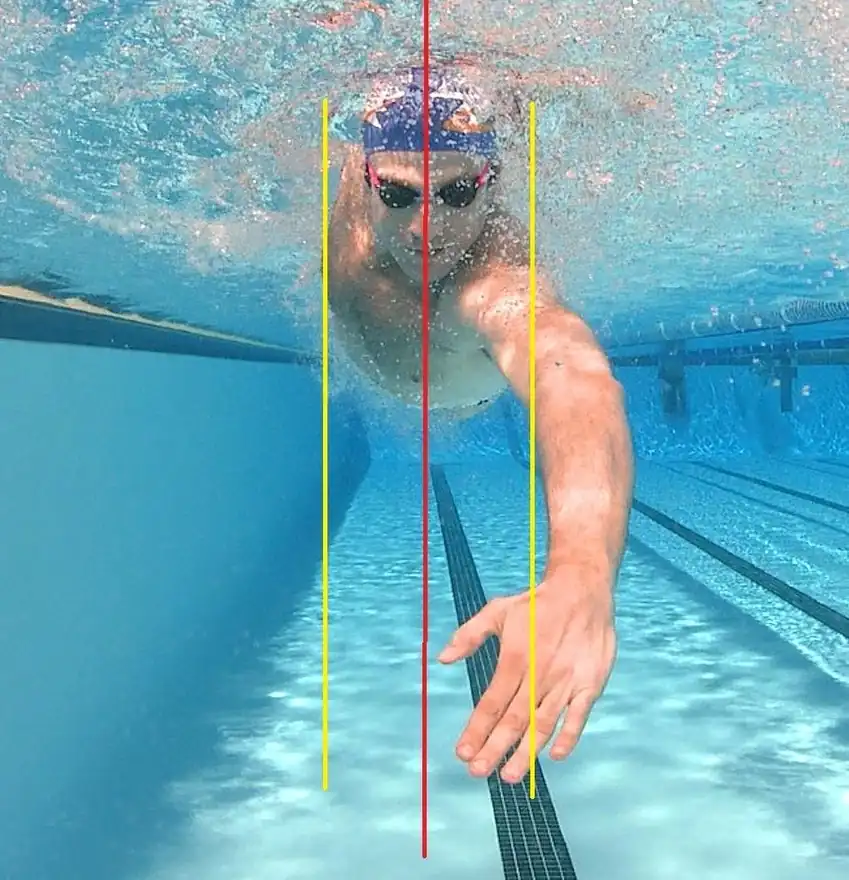
The red line is your centre line, this is your axis of rotation and a line you must not let your hands cross. If you exaggerate swimming with a slightly wider than you think you need hand entry, you will probably come out with the perfect entry (obviously don't go too crazy). Moving your hand along its yellow line is its most efficient path to generating force.
High Elbows - Now this is commonly confused with the shape of your arm on the recovery part of your freestlye stroke (the bit that happens when your arm moves back from your side to the front of your stroke). Within reason, what happens above the water is pretty immaterial. You might have a beautiful looking stroke above the water but that wont make you fast through it.
What high elbow actually refers to is what's happening at the front of your stroke.
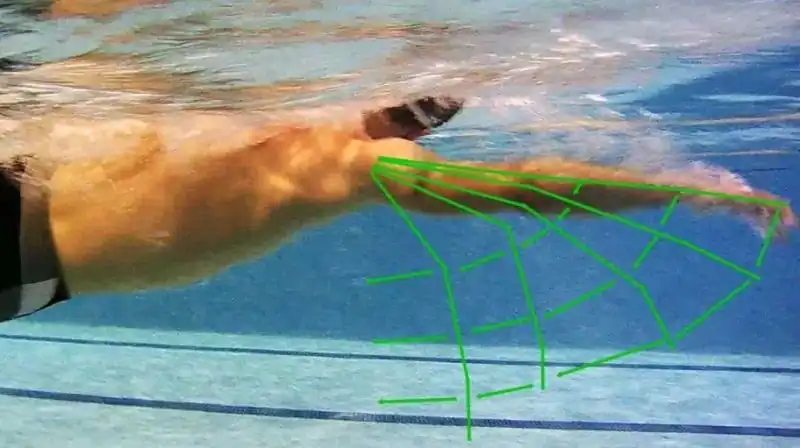
You need to concentrate on when your hand enters the water (wider than your shoulder) that your hand cuts deep into the water, that will naturally drive it lower in the water column as your momentum pushes you over your arm. If you don't observe the high wrist, high elbow rule you will end up overgliding and your fingers will glide up to the surface. When you do this you're effectively giving the water a big high 5.... something which is tantamount to a handbrake.
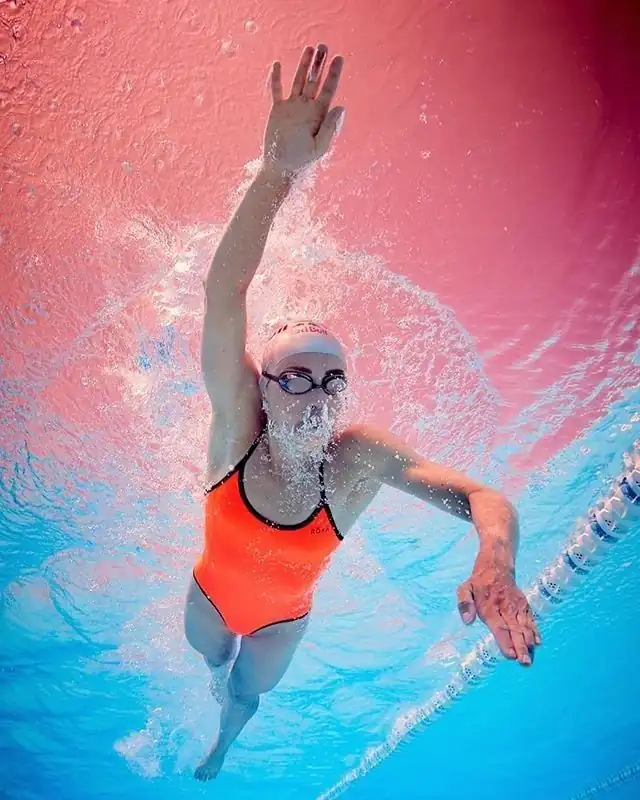
The last element that is important to the propulsive part of your swim stroke is you actually pushing the water behind you to drive you forwards.
One of the best means of improving this is practicing using the doggy paddle or polar bear swim drill. When doing this drill you don worry about the recovery phase, your hands stay in the water all the time. You purely focus on rolling from the hips, driving your hands forwards and down catching the water pulling you forward.
This may seem like a lack of emphasis on propulsion but usually, when you sort out someone's rotation and position in the water, the catch and propulsive phase of their stroke fall into place.
Hot Tip - Swimming is full of stuff you can buy that professes to be a magic bullet that will cure issues in your stroke. I'll save you a bit of time (and money) and let you know there are really only two bits of kit you need... neither are especially expensive and both are hugely supportive in developing an efficient stroke.
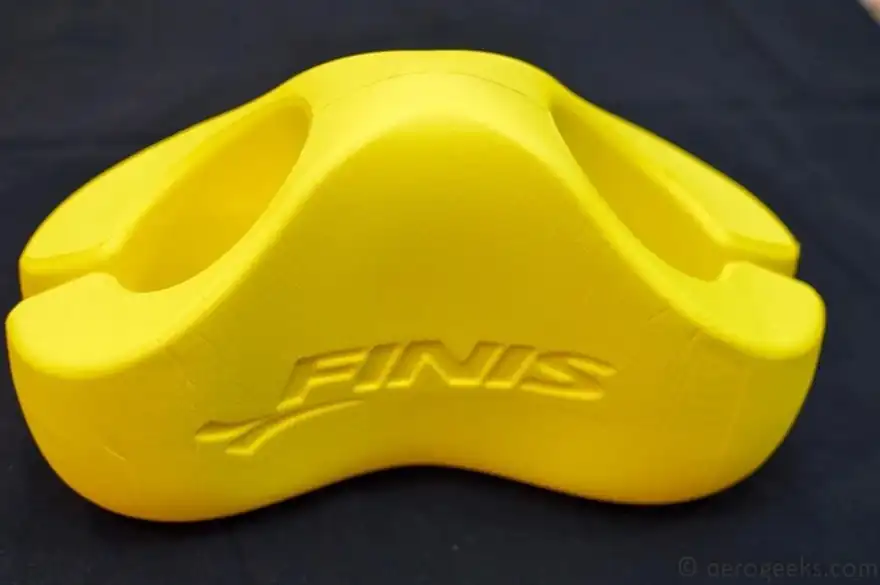
Finis Axis Pull Buoy - Now this isn't any pull buoy (no this isn't a sponsored plug), its actually a genuinely great bit of kit that completely supports the hip drive freestyle stroke. You could effectively recreate it with a pull buoy between your calfs and a rubber band but I've used this extensively and can totally vouch for its effectiveness.
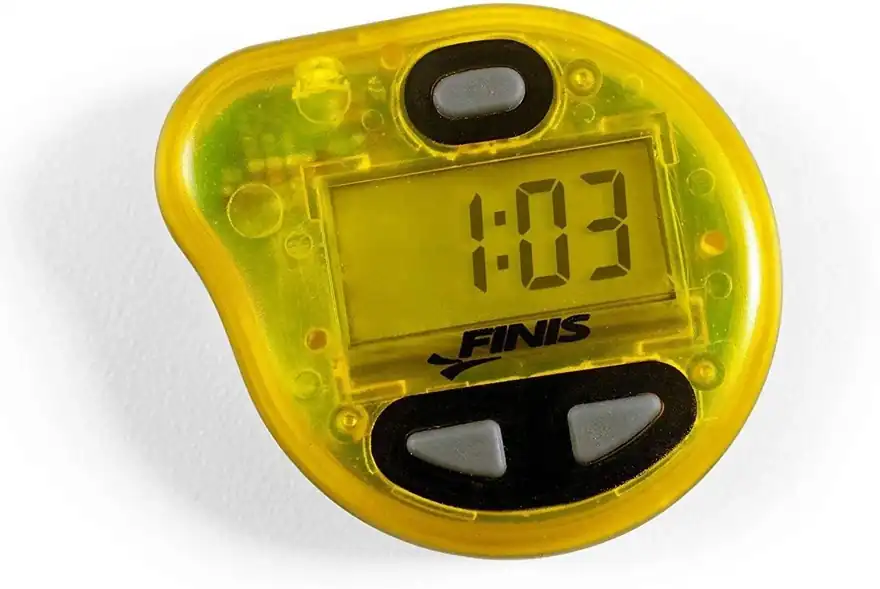
Tempo Trainer - I'll cover more on this in the last point.
8 - Cadence
Now this is the fine tuning of the stroke you have developed in the previous points. You have a full and efficient freestyle stroke if you've followed the previous points and its time to look at how quickly you do it.
To do this you will need a tempo trainer. Finis do a quality one that you fit to your goggles and it uses a metronome to guide your turnover. Again this isnt a sponsored plug, its purely a great product I would genuinely recommend.
Swim cadence is a funny thing, you can increase arm turnover and your speed will increase as a result because you're pulling the water more frequently. This increase in speed will carry on to a point when your perceived exertion increases and stroke quality drops significantly.
There are several drills you can do, 10 x 100m for example where you start with the cadence you have naturally arrived at, and you increase it by 2 or so strokes per minute each interval recording your perceived exertion and time for each. There will be a sweet spot where you stop getting faster (the point your stroke quality has degraded). The ideal cadence for you is the fastest speed before your perceived exertion ramps up.
Conclusion
Thankyou for reading, I appreciate its a long blog post but swimming is complex.
The main purpose of this was to explain you probably don't need to get stronger or start messing around with swim bands or even swimming particularly fast that often, you just need to focus on getting slippery in the water and making your bullet hole as small as possible. Then and only then can you look at propulsion and the rate at which you propel yourself to really fine tune your stroke.
[If you have any questions about any of the skills, drills or this whole logical approach to swimming then feel free to get in touch. ]()
Dedication
Pretty early on in my swim journey I turned up at the University of Bristol swimming pool and met a guy who shaped my understanding of swimming. This guy, this legend in speedos is Alan Wood, the head of Wood Trained Swimmers. Sadly Alan, passed away at the back end of 2020.
The words in my blog aren't his, they are my logical take on how to swim faster but he needs mentioning because not only was he a friend, he inspired me to look further into swimming faster and supported me as an athlete in the pool. Its fair to say the way he coached swimming had a massive impact on the way I coach and approach athlete development.
It truly was an honour to have shared a lane with him!
Train with Horsepower
If that is how you like your coaching, straight and built for your race, take a look at the training plans or see how coaching works.